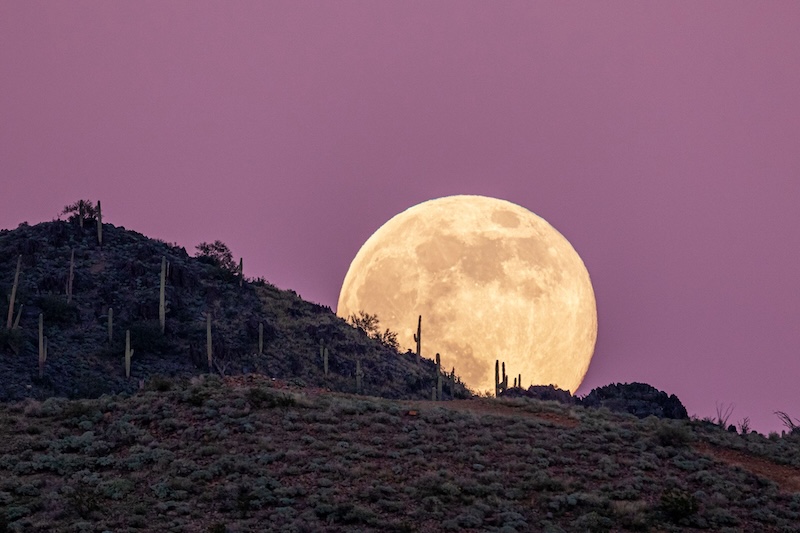
Get ready for an extraordinary year under the celestial spotlight! The year 2026 promises to be a truly exceptional period for skywatchers and astronomy enthusiasts alike, offering a rare abundance of lunar spectacles. Far from being just another year, the calendar of lunas llenas 2026 is set to deliver an unprecedented 13 full moons, a phenomenon that occurs only every two to three years. This guide will walk you through the key dates, fascinating phenomena like Supermoons and the rare Blue Moon, and offer tips to help you make the most of every luminous event.
The Celestial Symphony of 2026: An Unprecedented Lunar Year
Most years grace us with 12 full moons, one for each calendar month. However, 2026 breaks this pattern, presenting an astronomical treat with 13 distinct phases of maximum lunar illumination. This delightful anomaly stems from the subtle dance between our Moon’s synodic cycle and the Gregorian calendar. The Moon takes approximately 29.5 days to complete its full cycle of phases from one full moon to the next. Since most calendar months are longer than this period, over time, enough "extra" days accumulate for a month to host two full moons, or for the total annual count to climb to thirteen.
This extended celestial schedule ensures that nearly every four weeks, the night sky will be illuminated by a full moon, offering continuous opportunities for observation. For those planning their stargazing adventures, understanding the rhythm of the lunas llenas 2026 is key. It's a year that reminds us of the intricate, yet accessible, mechanics of our solar system, providing a natural spectacle that requires no complex instruments to appreciate, though binoculars or a basic telescope can certainly enhance the experience, bringing the Moon's craters and seas into sharper focus.
One of the most anticipated highlights of the 2026 lunar calendar is the occurrence of a "Blue Moon." This popular term refers not to the Moon's color, but to the rare coincidence of two full moons falling within the same calendar month. This unusual event is set to occur in April 2026, making it a particularly special month for lunar photography and observation. The first full moon of April will arrive on the 1st, a whimsical start to the month, while the second will spectacularly close it on the 30th. This double appearance in April underscores why the lunas llenas 2026 are so eagerly awaited by the astronomical community and casual observers alike.
Decoding the Full Moon Calendar 2026: Dates and Traditional Names
Beyond the simple observation of a brightly lit orb, each full moon carries a rich tapestry of cultural significance and traditional names. These names, often originating from Native American tribes and ancient European agricultural calendars, reflect the natural cycles, weather patterns, and activities prevalent during that time of year. They offer a poetic lens through which to view our connection to the Earth and sky. The lunas llenas 2026 will be no exception, offering a chance to reconnect with these age-old traditions.
Here are the confirmed dates for the full moons of 2026, along with some of their commonly associated traditional names, allowing you to plan your observations and deepen your appreciation for each celestial event:
- January 3: The Wolf Moon - Named for the hungry wolves howling outside villages in the depths of winter.
- February 1: The Snow Moon - Reflecting the heavy snowfalls typical of this month.
- March 3: The Worm Moon - Signifying the thawing ground and the emergence of earthworms, a harbinger of spring.
- April 1: The Pink Moon - Named after early spring flowers like wild ground phlox.
- April 30: The Blue Moon - This second full moon in April is a rare treat, not for its color, but its occurrence.
- May 30: The Flower Moon - Celebrating the widespread blooming of flowers across the landscape.
- June 29: The Strawberry Moon - Coinciding with the ripening of strawberries in North America.
- July 28: The Buck Moon - When male deer begin to grow new antlers.
- August 27: The Sturgeon Moon - Named for the large fish caught in the Great Lakes during this time.
- September 25: The Harvest Moon - The full moon closest to the autumnal equinox, aiding farmers by providing light for late-night harvesting.
- October 25: The Hunter's Moon - Ideal for hunting, as game animals are fattened and the moon provides light for tracking.
- November 24: The Beaver Moon - When beavers are actively preparing for winter, or a time to set traps for their furs.
- December 24: The Cold Moon - Acknowledging the frigid temperatures of the winter season.
For more detailed insights into each month's specific lunar event, including traditional names and celestial highlights, be sure to check out our comprehensive guide: All 2026 Full Moons: Dates, Traditional Names, and Celestial Highlights.
Beyond the Full Moon: Supermoons, Blue Moons, and Lunar Eclipses Explained
The year 2026 isn't just about the sheer number of full moons; it's also about their diverse characteristics. Among the lunas llenas 2026, we can look forward to Supermoons, Micromoons, and even a couple of lunar eclipses, each offering a unique twist to our lunar observations.
The Allure of the Blue Moon
As highlighted, April 2026 will present a rare Blue Moon. While the term might conjure images of an indigo orb, a Blue Moon is purely a calendrical phenomenon: the second full moon within a single calendar month. This unusual event is a testament to the slightly shorter lunar cycle compared to our Gregorian calendar months. The rarity of this event is often captured in the idiom, "once in a blue moon," making April a truly special time for lunar photography and skygazing.
Supermoons and Micromoons: The Dance of Perigee and Apogee
Throughout 2026, three of the full moons will also qualify as Supermoons. A Supermoon occurs when a full moon coincides with the Moon's closest approach to Earth in its elliptical orbit, known as perigee. When this happens, the Moon appears noticeably larger and brighter in the sky, creating a truly breathtaking display. Conversely, a Micromoon happens when a full moon occurs near the Moon's farthest point from Earth, or apogee, making it appear slightly smaller. Both phenomena highlight the dynamic nature of the Moon's orbit and offer distinct visual experiences for observers.
Lunar Eclipses: Earth's Shadow Play
Adding to the excitement, the lunas llenas 2026 calendar also includes two total or partial lunar eclipses. A lunar eclipse occurs when the Earth passes directly between the Sun and the Moon, casting a shadow on our celestial neighbor. Depending on the alignment, we can witness either a partial eclipse, where only a portion of the Moon is shadowed, or a total lunar eclipse, where the entire Moon is immersed in Earth's shadow, often taking on a dramatic reddish hue (the "Blood Moon") due to scattered sunlight. These events are visible from vast regions of the globe and are among the most spectacular lunar phenomena to observe, requiring no special eye protection.
Maximizing Your Lunar Experience in 2026: Tips for Stargazers
With 13 full moons, Supermoons, a Blue Moon, and eclipses, 2026 offers unparalleled opportunities for lunar observation. Here’s how you can make the most of every event:
- Plan Ahead: Mark your calendar with the full moon dates. While exact timings for maximum illumination are precise, the Moon appears full for a day or two around these dates. For specific details on these 13 events, including April's rare Blue Moon, refer to our dedicated article: Full Moon Calendar 2026: 13 Events and April's Rare Blue Moon.
- Seek Dark Skies: While full moons are bright enough to cut through some light pollution, a darker sky will enhance the viewing experience, allowing you to appreciate the subtle textures and colors of the lunar surface.
- Observe at Moonrise or Moonset: The "moon illusion" makes the Moon appear larger when it's low on the horizon, framed by trees or buildings. This is a fantastic time for photography.
- Use Simple Tools: The naked eye is perfectly sufficient to enjoy the full moon. However, a pair of binoculars can reveal incredible detail, like craters and maria. A small telescope will offer even more magnified views.
- Engage with Lunar Photography: Full moons, especially Supermoons and the Blue Moon, are excellent subjects for photographers. Experiment with different lenses, exposures, and compositions.
- Connect with Culture: Take a moment to reflect on the traditional names and the historical significance of each full moon. It adds a deeper, more human dimension to the astronomical event.
- Stay Informed: Keep an eye on local weather forecasts and specific times for moonrise and moonset in your area to ensure optimal viewing conditions.
Conclusion
The year 2026 is truly a gift for anyone who looks up at the night sky. With an extraordinary 13 full moons, including the rare Blue Moon in April, several magnificent Supermoons, and the dramatic spectacle of lunar eclipses, it promises a continuous display of celestial beauty. These events serve as a powerful reminder of the universe's accessible wonders, inviting us to pause, look skyward, and connect with the timeless rhythm of our natural satellite. So, prepare your calendars, gather your binoculars, and get ready to be mesmerized by the magnificent lunas llenas 2026 – a year that will undoubtedly leave an indelible mark on every stargazer's memory.